NOW ACCEPTING APPLICATIONS. APPLY TODAY!
Diagnostic Medical Sonography - Abdomen Extended & OB/GYN
Become the Eyes of the Medical Team.
Program Overview
Learn about what this program offers and what you'll achieve.
What is Diagnostic Medical Sonography - Abdomen Extended & OB/GYN?
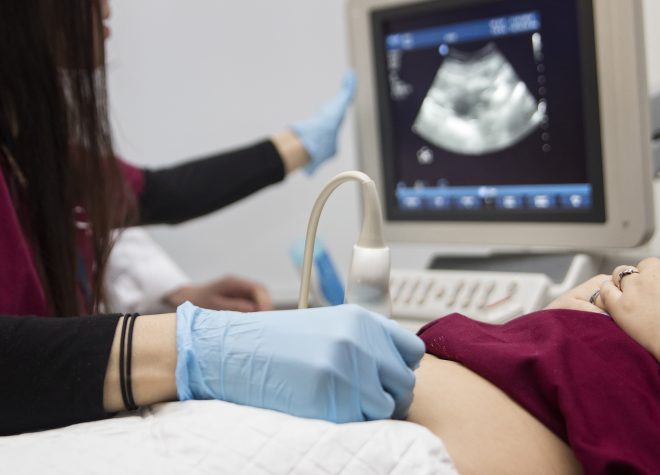
Sonography is a dynamic, hands-on field that requires a sharp mind and a steady hand. As a Diagnostic Medical Sonographer, you use ultrasound technology to look inside the human body, providing immediate insights into patient health—from prenatal care to cardiovascular health.
What does a professional do?
Ultrasound is more than just imaging; it’s about providing critical answers when patients need them most. Our Diagnostic Medical Sonography program takes you beyond the textbook. You will master high-frequency waves to visualize internal structures, monitor fetal development, and assist in life-saving diagnoses.
The "Sonographer’s Touch": Success in this field requires physical dexterity and critical thinking. Our program focuses on extensive lab time and clinical rotations, helping you develop the "touch" needed to capture clear, accurate diagnostic images. Multi-Specialty Advantage: We prepare you for success across multiple domains, including Abdominal, OB/GYN, and Vascular sonography. This diverse training makes you a highly flexible and sought-after candidate for healthcare employers. Board-Certified Excellence: We align our curriculum with the high standards of the American Registry for Diagnostic Medical Sonography (ARDMS). When you graduate, you aren't just a student—you are a professional prepared to meet national benchmarks for excellence.
Professional Characteristics
- Deliver care with empathy, respect, and genuine concern for each patient’s well‑being.
- Apply analytical reasoning and sound judgment to make informed decisions in fast‑paced clinical environments.
- Maintain accuracy and precision in all tasks to ensure high‑quality outcomes and patient safety.
- Convey information clearly and professionally with patients, families, and healthcare team members.
- Work seamlessly with colleagues and interdisciplinary teams to provide the best possible patient care.
Program Highlights
- CAHE's curriculum is reverse-engineered from national board standards to ensure you don't just pass—you excel. CAHE's registry preparatory course and credentialing exam pass rates are the bridge between being a student and becoming a registered professional in a competitive market.
- Graduate with clinical maturity. By rotating through major hospital systems and leading imaging centers you move beyond the classroom to master high-pressure patient care. You won't just learn the theory; you will build the "muscle memory" required to be a clinician from your first day on the job.
- Receive expert mentorship. Our instructors are active clinicians in their fields who teach you the nuances of the "hidden curriculum" - the soft skills, technical shortcuts, and patient-interaction techniques that separate a new graduate from a seasoned employee.
- CAHE's program is designed for efficiency and intensity, allowing you to enter a high-demand field in less than two years. We value your time by focusing only on the skills that lead directly to employment and patient outcomes.
- Students deserve a path to a new career that respects your current commitments. CAHE offers Daytime and Evening/Sunday schedules so you can maintain your personal and financial stability while you work toward your professional transformation.
Earn an Associate's Degree While You Train
Applicants who enter the program without a degree are strongly encouraged to dually enroll at CAHE's affiliated college to earn an associate degree while earning their certificate of completion from Center for Allied Health Education.
Program Structure
Format: Blended/Hybrid
Clinical rotations: Begin in the Third Term
CAHE's program is designed for efficiency and intensity, allowing you to enter a high-demand field in less than two years. We value your time by focusing only on the skills that lead directly to employment and patient outcomes. Gain hands-on experience in CAHE's laboratory facility as well as clinical experience in medical facilities, ensuring you are day-one ready for your first job.
Graduation Requirements
✓ Meet all academic requirements.
✓ Meet all clinical requirements and attain all required competencies.
✓ Successfully complete Career Development Workshop series.
✓ Meet all financial obligations.
✓ Complete an exit interview.
✓ Return their CAHE swipe card, Clinical Affiliate ID cards, etc.
GPA Requirement: C average (GPA of 2.0)
Completion Window: Students who have not fulfilled their graduation requirements have 20 weeks from their originally scheduled graduation date to complete all missing requirements.
Certification & Licensure
Professional credentials and licensing requirements.
Certification Exam
ARDMS (American Registry of Diagnostic Medical Sonography)
Micro-Credentials
Upon successful completion of the program, graduates will also receive:
Basic Life Support (CPR), Blood Borne Pathogens (Infection Control), HIPAA
Mission & Goals
What we aim to achieve and how we measure success.
Mission Statement
CAHE's Diagnostic Medical Sonography program has made a firm commitment to the education of students in the field of diagnostic medical sonography. Our mission is the education of students who reflect excellence in didactic knowledge, clinical skills and patient sensitivity and are capable of performing various sonographic examinations. Our comprehensive curriculum, which follows the National Education Curriculum for Sonography, will provide training to ensure that these services are delivered with compassion and respect for human dignity and diversity.
Goals
The Diagnostic Medical Sonography program offers an educational program in sonography at the certificate level. The program's goal is to prepare competent entry-level sonographers in the cognitive (knowledge), psychomotor (skills), and affective (behavior) learning domains for the following concentrations: Abdominal Sonography Extended, Obstetrics and Gynecology sonography, Adult Cardiac sonography and Vascular sonography trained to provide and deliver compassionate, high-quality care in an urban and diverse environment.
Upon completion of the program the following goals will have been achieved:
Program Objectives
Upon completion of the program, graduates will:
- Obtain relevant patient history by oral interview and/or chart review for clinical data such as lab tests or previous imaging scans to enable optimum diagnostic sonograms.
- Operate ultrasound equipment safely and accurately to obtain sonographic images of diagnostic quality.
- Practice proper infection control prevention in the clinical setting.
- Perform appropriate exam protocols to record normal anatomy or pathology in the body.
- Perform appropriate exam protocols for each area of specialization: obstetrics and gynecology; abdomen and superficial structures; vascular; and adult echocardiography.
- Record data for interpretation and analysis for the supervising physician.
- Analyze sonograms using critical thinking skills to compose a preliminary report.
- Demonstrate excellent therapeutic communication skills with patients and with others in the healthcare setting.
- Respect the privacy of the patients by adhering to HIPAA regulations at all times.
- Conduct oneself in an ethical and legal manner in accordance with the Code of Professional Conduct of the Society of Diagnostic Medical Sonographers which includes the following in its preamble:
- Sonographers shall act in the best interests of the patient.
- Sonographers shall provide sonographic services with compassion, respect for human dignity, honesty and integrity.
- Sonographers shall respect the patient's right to privacy, safeguarding confidential information within the constraints of the law.
- Sonographers shall maintain competence in their field.
- Sonographers shall assume responsibility for their actions.
Course Schedule
Class and clinical scheduling information.
The Sonography Program is a full-time program. The program is 22-month, divided into 7 quarters, 10 weeks each. The schedule varies by quarter. Students are provided with their schedule for each term approximately 30 days before the start of the term.
Location
The majority of courses take place on campus. Additionally, a handful of classes are required to be completed through CAHE's affiliated college.
Schedule Details
Daytime Schedule: On-campus classes may be scheduled Sunday through Friday between the hours of 9:00 a.m. and 5:00 p.m. and are subject to change. Some classes are held in a hybrid/online format and up to 5 days a week. Clinical rotation schedules are generally Monday through Friday between 9:00 a.m. and 5:00 p.m. and are subject to change based on shift availability. Make-up sessions/activities may be conducted on Sundays. Evening Schedule: On-campus classes may be scheduled Monday through Thursday between the hours of 4:00 p.m. and 9:30 p.m., or 9 a.m. to 5 p.m. on Sundays and are subject to change. Some classes are held in a hybrid/online format. Clinical rotations for the evening cohort will be scheduled in the evening time, on Sundays, or during the daytime hours. Clinical rotations are subject to clinical shift availability. The schedule is subject to change and does vary each term. Students will be provided with their schedules for the following term 30 days prior to the start of the term.
Upcoming Cohorts
DMS – Winter 2026 – GENERAL TRACK (Abdomen & OB/GYN) – DAYTIME
BrooklynStarts: November 30, 2026
Ends: September 2028
Schedule: Day
Orientation will be held approximately one week prior to the start of the program.
DMS – Spring 2027 – GENERAL TRACK (Abdomen & OB/GYN) – DAYTIME
Brooklyn, Staten IslandStarts: February 15, 2027
Ends: December 2028
Schedule: Day
Orientation will be held approximately one week prior to the start of the program.
DMS – Spring 2027 – GENERAL TRACK (Abdomen & OB/GYN) – EVENING
Brooklyn, Staten IslandStarts: February 15, 2027
Ends: December 2028
Schedule: Evening
Orientation will be held approximately one week prior to the start of the program.
Program Curriculum
Courses, hours, and what you'll learn.
The Diagnostic Medical Sonography program curriculum includes comprehensive coursework in foundational healthcare skills, anatomy and physiology, sonographic physics, abdominal and obstetric/gynecologic sonography, echocardiography, vascular ultrasound, and extensive clinical education.
Foundational Courses
| Course Number | Course Title |
|---|---|
| AHS 1110 | Foundational Skills and Terminology for Healthcare Providers I |
| AHS 1210 | Foundational Skills for Healthcare Providers II |
| BIO 1000 | Anatomy and Physiology |
| BIO 1210 | Cross-sectional Anatomy |
| ENG 1001 | English |
| MAT 1001 | Math |
| PHY 1001 | Physics |
Sonography Core Courses
| Course Number | Course Title |
|---|---|
| DMS 1211 | Abdominal Sonography I |
| DMS 1210L | Abdominal Sonography I Lab |
| DMS 1221 | Obstetric and Gynecologic Sonography I |
| DMS 1220L | Obstetric and Gynecologic Sonography I Lab |
| DMS 1230 | Sonographic Physics and Instrumentation I |
| ETH 1351 | Ethics and Law in the Healthcare Professions |
| DMS 1310 | Abdominal Sonography II |
| DMS 1310L | Abdominal Sonography II Lab |
| DMS 1330 | Sonographic Physics and Instrumentation II |
| DMS 1421 | Obstetric and Gynecologic Sonography II |
| DMS 1420L | Obstetric and Gynecologic Sonography II Lab |
| DMS 1440 | Sonography of Superficial Structures (Elective) |
| DMS 1440L | Sonography of Superficial Structure Lab (Elective) |
| DMS 1551 | Quality Management and Operational Issues |
| DMS 1751 | Case Study Critiques |
| DMS 1801 | Registry Review |
Echocardiography and Vascular Courses
| Course Number | Course Title |
|---|---|
| DMS 1570 | Echocardiography I |
| DMS 1570L | Echocardiography I Lab |
| DMS 1580 | Vascular Ultrasound I |
| DMS 1580L | Vascular Ultrasound I Lab |
| DMS 1770 | Echocardiography II |
| DMS 1770L | Echocardiography II Lab |
| DMS 1780 | Vascular Ultrasound II |
| DMS 1780L | Vascular Ultrasound II Lab |
Clinical Education
| Course Number | Course Title |
|---|---|
| DMS 1390 | Clinical Education I |
| DMS 1490 | Clinical Education II |
| DMS 1590 | Clinical Education III |
| DMS 1690 | Clinical Education IV |
Progression Policy
How students advance through the program.
A student must pass all courses in the program in order to graduate from the program. A student must pass all courses in a quarter/quarter in order to progress to the next quarter/quarter in the program. If a student fails one course in a quarter/quarter the following policy is in effect: Progression Course: they face termination from the program. A progression course is defined as a course that is delineated as a pre-requisite course for a course in the following quarter/quarter. All required pre-requisite courses are listed in the Academic Policy as published in the Catalog Addendum. Non-Progression Course: the course must be made up as per the Make-Up Policy published in the Institutional Catalog. Diagnostic Medical Sonography program students are required to sit for the ARDMS Sonography Principles and Instrumentation (SPI) exam by the end of their fourth quarter in order to progress to their fifth quarter.
Comprehensive Exam
A student who fails up to two didactic courses in a quarter may qualify for a comprehensive exam(s) for each of the failed courses. The results of the comprehensive exam(s) will determine the student's requirements to meet the objectives of the failed course. Qualifying for a Comprehensive Exam: In order to qualify for a comprehensive exam a student's course average must be a minimum grade of 65. Results of the Comprehensive Exam: 90 to 100 – the student will be considered to have passed the course and will receive the minimum passing grade as their recorded score 80 to 89 – the student will be required to complete an independent course of study that meets the objectives of the course. A learning contract will be signed by the student detailing the objective criteria they are required to complete. Once complete the minimum passing grade will be recorded as their score 79 or below – Progression Course: the student has failed the course. Non-Progression Course: the student will need to make-up the course as per the Make-Up Policy as published in the Institutional Catalog.
Qualifying Grade: Minimum grade of 65 %
Grading Scale
How coursework is evaluated.
| Letter Grade | Numerical Equivalent | Quality Points | Legend |
|---|---|---|---|
| A | 90-100 | 4.0 | Excellent |
| B+ | 85-89 | 3.5 | Very Good |
| B | 80-84 | 3.0 | Very Good |
| C+ | 75-79 | 2.5 | Satisfactory |
| C | 70-74 | 2.0 | Satisfactory |
| D | 65-69 | 1.0 | Unsatisfactory |
| F | 0-64 | 0 | Failure |
| P | – | – | Pass |
| TF | – | – | Transfer Credits |
| INC | – | 0 | Incomplete |
| W | – | – | Official Withdrawal |
| FW | – | 0 | Failure due to Unofficial Withdrawal |
| FT | – | 0 | Failure due to Termination |
Program Outcomes
Below are the outcomes, as reported to CAAHEP/JRC-DMS and ABHES. Each accrediting agency has its formula for defining and measuring program outcomes and relies on different time periods for assessment.
Reported to: ABHES
Reporting period: 7/1/24 – 6/30/25
Reported to: JRCDMS/CAAHEP
Reporting period: 2023–2025
Program effectiveness data for the Diagnostic Medical Sonography Program, as reported to JRCDMS/CAAHEP.
Admissions Requirements
Prerequisites and eligibility requirements.
Applicants must meet the following requirements to be considered for admission to the Diagnostic Medical Sonography program.
General Requirements
- • Applicants must be 18 years of age or older prior to orientation.
- • Applicants must have completed a recognized high school or equivalent. Individuals who attended an online high school, or who were homeschooled, should contact the Admissions Department to determine their eligibility to enroll.
- • Applicants must be in good mental and physical health, free from any physical handicaps which would interfere with their work. Ultimately, individuals must meet the Technical Standards for Admissions listed for each program.
Technical Standards
This policy outlines the technical standards that each applicant/student must be able to accomplish.
Each applicant/student must be able to:
- • Lift more than 50 pounds routinely.
- • Push and pull routinely.
- • Bend and stoop routinely.
- • Have full use of both hands, wrists and shoulders.
- • Distinguish audible sounds.
- • Adequately view sonograms, including color distinctions.
- • Work standing on their feet 80% of the time.
- • Interact compassionately and effectively with the sick or injured.
- • Assist patients on and off examining tables.
- • Communicate effectively with patients and other health care professionals.
- • Organize and accurately perform the individual steps in a sonographic procedure in the proper sequence.
Any applicant who does not meet the technical standards as outlined above is ineligible for admission to the school.
Any student whose status changes while enrolled and no longer meets the technical standards as outlined above may not be allowed to continue to progress through the program.
Admission Process
Step-by-step admissions instructions.
The admission process consists of three main steps: Application & Documents, Entrance Exam, and Interview.
- 1
STEP 1: APPLICATION & DOCUMENTS
Applicants should complete the general program application (www.cahe.edu/apply) along with a $50.00 (non-refundable) application fee. All required supplemental documents may be found on the "Application Checklist" and should be mailed/submitted in-person. Documents may be submitted individually or together. All documents should be in prior to the scheduled interview date.
Apply Now - 2
STEP 2: ENTRANCE EXAM
Applicants who are exempt from the entrance examination requirement or successfully pass the required portions of the entrance examination will be scheduled to begin the interview process. Applicants who are required to take one or both portions of the entrance examination will be scheduled to do so.
- 3
STEP 3: INTERVIEW
A formal interview is required of all applicants as the last step in the admissions process. Applicants are encouraged to dress professionally and to familiarize themselves with the field, program structure, as well as accreditation.
Entrance Exam Exemption Criteria
Exemption from Verbal:
- •A minimum SAT score of 470 in Critical Reading or ACT score of 19 in English.
- •A minimum grade of a "C" on a college level, credit-bearing English literature course from an institution, accredited by an accrediting agency recognized by CHEA or US Department of Education.
Exemption from Math:
- •A minimum SAT score of 490 in Math or ACT score of 20 in Math.
- •A minimum grade of a "C" on a college level, credit-bearing math course from an institution accredited by an accrediting agency recognized by CHEA or US Department of Education.
Tuition & Fees
Tuition, fees, and payment-related details.
Tuition for the Diagnostic Medical Sonography Program (2025-2027) is $8,500.00 for each of the program's 7 quarters plus fees listed below, and a total tuition of $59,500.00 plus fees for the entire program.
Tuition
Total Tuition: $59,500.00 plus fees, or $63,975.
fees listed below
| Due | Amount |
|---|---|
| Tuition Enrollment Payment Towards Quarter 1 Tuition | $500.00 |
| Prior to First Quarter | $16,500.00 |
| Prior to Third Quarter | $17,000.00 |
| Prior to Fifth Quarter | $17,000.00 |
| Prior to Seventh Quarter | $8,500.00 |
Fees
| Category | Due | Amount |
|---|---|---|
| Registration Fee Non-refundable | Upon Registration | $100 |
| Clinical Fee Covers malpractice/liability insurance, lab operation, and clinical sites | Prior to First Quarter | $500 |
| Technology Fee Online learning resources, learning management system, student portal, and computerized library | Prior to First Quarter | $750 |
| Clinical Fee Covers malpractice/liability insurance, lab operation, and clinical sites | Prior to Third Quarter | $500 |
| Technology Fee Online learning resources, learning management system, student portal, and computerized library | Prior to Third Quarter | $750 |
| Clinical Fee Covers malpractice/liability insurance, lab operation, and clinical sites | Prior to Fifth Quarter | $500 |
| Technology Fee Online learning resources, learning management system, student portal, and computerized library | Prior to Fifth Quarter | $750 |
| Clinical Fee Covers malpractice/liability insurance, lab operation, and clinical sites | Prior to Seventh Quarter | $250 |
| Technology Fee Online learning resources, learning management system, student portal, and computerized library | Prior to Seventh Quarter | $375 |
Repeat Course Fee: This fee of $500 will apply to any term that a student is repeating a course that they previously failed.
Additional Costs
Clinical Clearance
$460
Students are required to have a physical examination and be medically cleared by a private physician as well as have a criminal background check performed. The background check is done through a third-party company called DISA Healthcare.
Textbooks
$1,970
Students are required to purchase all textbooks on their own. The estimated cost of textbooks for the program is $1970.
iPAD AND ACCESSORIES
$465
Students are required to use the school-issued iPad when participating in virtual lectures, completing assignments, accessing Canvas and participating in exams. The cost of the iPad is due prior to Orientation and is non-refundable once the student has received the iPad.
Room And Board
Students are required to make their own arrangements for housing. The cost of room and board is at the student's expense.
Credentialing Examination
See board for current fees
All students are required to take and pass the ARDMS Sonography Principles and Instrumentation (SPI) exam during enrollment (by the end of the fourth quarter). Upon completion of the program, students are eligible to apply for the ARDMS Abdomen and Obstetrics & Gynecology specialty exams. Students are only credentialed as a sonographer once they successfully pass the SPI exam plus a specialty exam. Exam fees are set by ARDMS and are at the student's expense; these costs are required for employment/credentialing, not to complete the CAHE program.
Professional Organizations
Student may wish to join one or more of the professional organizations in the field. Membership fees are at the student's expense.
Health Insurance
Students are expected to supply their own health insurance plans.
Affiliated College Coursework
Tuition/Payment for any courses taken directly at St. Francis College, CAHE's affiliated college, will be paid directly to St. Francis College at the reduced tuition rate ($475-$495 per credit) offered to CAHE students. Courses at St. Francis College are for students who enter CAHE without an associate degree or greater. All courses offered through St. Francis College are taught virtually and in an asynchronous format by St. Francis College faculty/staff. Students entering the program without a minimum of an associate degree will be required to complete up to 25 credits through St. Francis College during their enrollment at CAHE.
Financial Aid & Scholarships
Federal Financial Aid is available to eligible students, who apply. For more information, please refer to the Financial Aid section on this page.
For more information, please refer to the financial aid page .
Payment Plans
Payment Plans may be available to students on a case-by-case basis.
Refund Policy
Cancellation and refund details.
Enrollment Agreement Cancellation Policy
Students may cancel their enrollment agreement within seven (7) business days of signing the enrollment agreement, and will receive a refund of their registration fee and any tuition paid to date. Thereafter, a student will be liable for the non-refundable registration fee and any tuition liability as of the student's last date of physical attendance, pursuant to the Refund Policy as published in the Catalog.
After the first day of instruction, the student will be liable for the registration fee and any tuition liability as of their last day of physical attendance, defined as the last day in which the student participated in academically-related activity, including projects, clinical experience or examinations. The non-refundable application and registration fees, as well as items of extra expense to a student, (e.g. uniform, clinical and technology fees) will not be considered in tuition refund computations. Total tuition liability is limited to the quarter/semester during which the student withdraws or is terminated, as well as any previous quarters/semesters completed.
During the First Quarter of the Program
| Student's Last Date of Attendance | The School May Retain No More Than |
|---|---|
| 1st week of the Quarter | 0% of the total Quarter's tuition |
| 2nd week of the Quarter | 25% of the total Quarter's tuition |
| 3rd week of the Quarter | 50% of the total Quarter's tuition |
| 4th week of the Quarter | 75% of the total Quarter's tuition |
| 5th week of the Quarter | 100% of the total Quarter's tuition |
During the Second and Remaining Quarters of the Program
| Student's Last Date of Attendance | The School May Retain No More Than |
|---|---|
| 1st week of the Quarter | 25% of the total Quarter's tuition |
| 2nd week of the Quarter | 50% of the total Quarter's tuition |
| 3rd week of the Quarter | 75% of the total Quarter's tuition |
| 4th week of the Quarter | 100% of the total Quarter's tuition |
Accreditation
Programmatic and institutional accreditation.
The Diagnostic Medical Sonography Program is accredited by the Commission on Accreditation of Allied Health Education Programs (CAAHEP) upon the recommendation of the Joint Review Committee on Education in Diagnostic Medical Sonography. Recognition by CAAHEP qualifies the program's graduates for eligibility to apply for and take the certification exam for the American Registry of Diagnostic Medical Sonography (ARDMS). The Diagnostic Medical Sonography program at Center for Allied Health Education received an accreditation award of 5 years from CAAHEP, which is the maximum accreditation length.
-
CAAHEP
Accreditation- Address:
- 9355 – 113th ST. N, #7709 SEMINOLE, FL 33775
- Phone:
- 727-210-2350
- Website:
- www.caahep.org
-
JRC-DMS
Accreditation- Address:
- P.O. Box 2050, Ellicott City, MD 21041
- Phone:
- 443-973-3251
- Website:
- www.jrcdms.org
-
ARDMS
Certification- Address:
- 1401 ROCKVILLE PIKE, SUITE 600 ROCKVILLE, MD 20852-1402
- Phone:
- (301) 738-8401
- Website:
- www.ardms.org
Employment Opportunities
Where graduates work and what certifications open the door.
ARDMS
Credentialing exam
ARDMS (American Registry of Diagnostic Medical Sonography)
Additional certifications you may earn
- Basic Life Support (CPR)
- Blood Borne Pathogens (Infection Control)
- HIPAA
Clinical Geography
Where students train across the New York metro area.
Clinical education connects classroom learning to affiliated healthcare sites across Brooklyn, Staten Island, and other nearby parts of the New York metro. Placements depend on program requirements, site availability, and affiliation arrangements—not every student is assigned to the same site.
Training locations for this program
- Brooklyn
- Staten Island
Site names, neighborhoods, and program coverage on the Clinical Education Sites hub reflect representative partner affiliations. Specific student placements vary by cohort, schedule, and clinical capacity.