Every day, advances in medical technology help healthcare professionals deliver safer and more effective patient care. In the field of radiation therapy, even small improvements in accuracy can make a meaningful difference. Researchers are continually developing new ways to measure radiation doses more precisely, and one of the latest innovations comes from an unexpected source: lab-grown diamonds.
A recent study published in Medical Physics by researchers from Tokyo Metropolitan University, Tohoku University, and Orbray Co., Ltd. explored how lab-grown diamonds could improve radiation dosimetry. While diamonds are often associated with jewelry, scientists believe this advanced material may one day help healthcare professionals measure radiation doses with greater precision during both medical imaging and cancer treatment.
Radiation therapy is one of the most effective treatments for many types of cancer. During treatment, carefully calculated doses of radiation are delivered directly to a tumor while minimizing exposure to surrounding healthy tissue. Because every patient’s treatment plan is carefully designed, measuring radiation accurately is essential. Even small differences in dose measurement can affect treatment quality, making precise dosimetry a critical part of patient care. Dosimetry is the science of measuring radiation doses. Healthcare professionals rely on specialized equipment called dosimeters to verify that radiation is being delivered exactly as intended. These measurements help ensure that patients receive the prescribed dose while supporting both treatment effectiveness and patient safety.
A smaller, more sensitive detector
Today, one of the most common tools used for radiation dosimetry is the air-based ionization chamber. These devices measure radiation by detecting electrical charges produced as radiation passes through a volume of air. Although this technology has been used successfully for many years, it has limitations. Measuring very low doses of radiation, such as those used during diagnostic X-rays, often requires relatively large detectors, making it more difficult to perform detailed measurements in smaller spaces.
To address these challenges, researchers investigated whether lab-grown diamonds could serve as a more sensitive material for radiation detection. Using a specialized manufacturing process called heteroepitaxy, scientists grew diamond layers atom by atom onto an electrode to create a compact radiation detector. The results were promising. The prototype diamond detector measured only 4 by 4 by 0.5 millimeters—approximately 1,250 times smaller than many conventional air-based ionization chambers. Despite its small size, the device demonstrated sensitivity per unit volume that was more than 13,000 times greater than traditional detectors while maintaining excellent accuracy across the range of radiation energies used during diagnostic imaging.
One of the most exciting findings from the study is the possibility that a single dosimeter could eventually be used for both diagnostic imaging and radiation therapy. Currently, different clinical situations often require different types of radiation detectors because the amount of radiation used during an X-ray is much lower than the dose delivered during cancer treatment. Researchers believe this new diamond-based technology may perform accurately across both settings, creating greater consistency in radiation measurement throughout the patient’s healthcare journey. Another advantage comes from the material itself. Diamonds are composed primarily of carbon, an element that is also abundant in the human body. Because of this similarity, diamond detectors respond to radiation in ways that closely resemble human tissue. This characteristic makes them especially attractive for medical dosimetry, where accurately representing how radiation interacts with the body is extremely important.
The compact design of the detector may also expand where radiation measurements can be performed. Researchers suggest that these devices could eventually support real-time monitoring during radiation treatments, personal radiation monitoring, environmental radiation measurements, and even arrays of tiny detectors capable of mapping radiation doses across an entire treatment area. Such detailed information could help healthcare professionals evaluate dose distribution with even greater precision.
Improved sensitivity at very low radiation levels may also benefit future research. Scientists continue to study the effects of low-dose radiation exposure, and more accurate measurement tools could provide valuable data that supports advances in radiation safety and patient care.
Although additional research and testing are still needed before this technology becomes widely available in hospitals and cancer centers, the study represents an exciting step forward. Innovations like these demonstrate that radiation medicine continues to evolve through advances in engineering, materials science, and medical physics. Each improvement helps healthcare professionals work toward the same goal: delivering radiation as accurately, safely, and effectively as possible.
What it means for medical dosimetrists
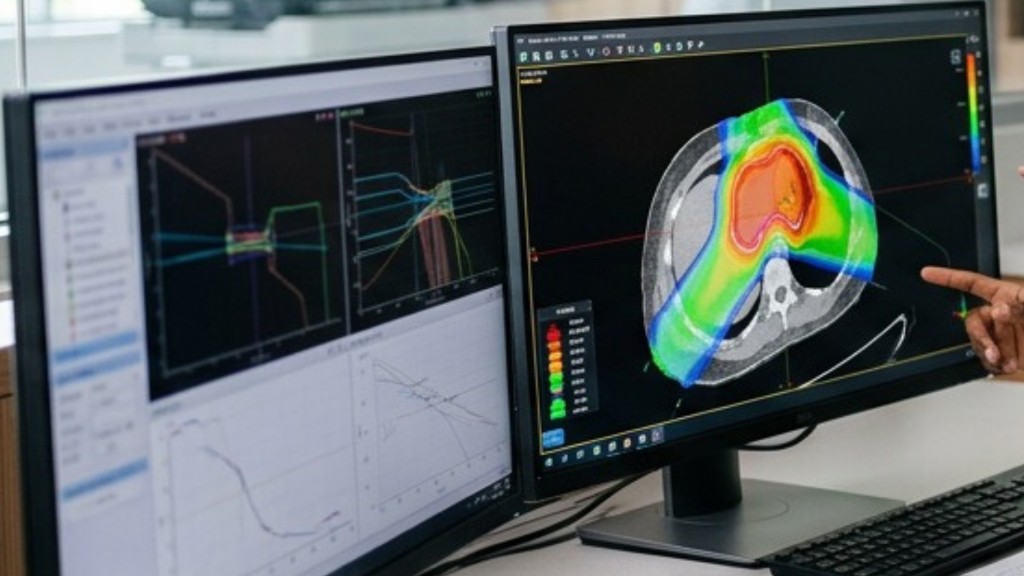
Medical dosimetrists play an essential role in this process. Working closely with radiation oncologists and medical physicists, they develop individualized treatment plans that calculate how radiation should be delivered to each patient. As new technologies emerge, medical dosimetrists help integrate these advances into clinical practice while maintaining the precision and quality standards that modern cancer care demands.
The future of radiation therapy will continue to be shaped by innovation. Whether through improved treatment planning software, advanced imaging systems, or new technologies like diamond-based radiation detectors, healthcare professionals are constantly finding ways to improve patient outcomes and treatment accuracy. Here at CAHE, students in the Medical Dosimetry program prepare for a career at the forefront of these exciting advancements. Through comprehensive education and hands-on training, students develop the knowledge and technical skills needed to contribute to safe, accurate, and innovative cancer treatment. As technology continues to transform radiation therapy, tomorrow’s medical dosimetrists will play an important role in bringing these innovations into patient care.
Source: Phys.org — “Lab-grown diamond device could change how radiation doses are measured”.