If you like the idea of a hands-on healthcare career that mixes technology with real patient care, radiography may be a good fit. Radiologic technologists, often called rad techs or x-ray techs, help doctors see inside the body. That helps diagnose broken bones, check on illnesses, and guide treatment.
This guide covers what rad techs do, where they work, and the path to becoming one in New York.
What Is Radiography?
Radiography is the use of x-rays to create images of the inside of the body. A radiographer is the trained professional who captures those images.
Rad techs work as part of a team. Their key partner is the radiologist, a physician who reads and interprets the images. The technologist’s job is to produce clear, accurate images safely, so the radiologist has what they need to make a diagnosis.
What a Radiologic Technologist Does Day to Day
No two shifts look exactly alike, but most days include:
- Explaining procedures to patients. Many people feel nervous before an exam. A calm, clear explanation goes a long way.
- Positioning patients carefully. The right angle and placement make the difference between a useful image and a repeat exam.
- Operating imaging equipment. Rad techs set up and run the x-ray machines and adjust settings for each patient and body part.
- Applying radiation safety. Technologists follow the ALARA principle, which stands for “As Low As Reasonably Achievable.” It means keeping radiation exposure as low as possible for patients, coworkers, and themselves while still getting a quality image.
Key Skills That Matter
Strong rad techs combine technical skill with people skills:
- Patient care: compassion, patience, and good communication
- Precision: attention to detail in positioning and technique
- Safety awareness: consistent use of protective practices
- Teamwork: working smoothly with radiologists, nurses, and other staff
Where Rad Techs Work
Medical imaging is needed in many settings, including:
- Hospitals
- Outpatient imaging centers
- Urgent care clinics
- Orthopedic practices
Each setting has its own pace. A busy hospital may bring a wide variety of cases, while an orthopedic office may focus on bones and joints.
The Path to Becoming a Radiologic Technologist in New York
In New York, there are a few clear steps.
1. Complete a Radiography Education Program
Start with a program that combines classroom learning with supervised clinical experience. This prepares you for the certification exam and for the job itself.
2. Pass the ARRT Radiography Exam
To become a registered technologist, you pass the radiography certification exam from the American Registry of Radiologic Technologists (ARRT). Passing earns you the credential R.T.(R). The “R” in parentheses stands for radiography.
3. Get Your New York State License
New York also requires a state license to practice. Licenses are issued through the NYS Department of Health, Bureau of Environmental Radiation Protection. Both the ARRT credential and the NYS license matter for working in New York.
Room to Grow: CT, MRI, Mammography, and More
Radiography is a common starting point for a longer medical imaging career. Many registered radiographers later earn additional credentials in other modalities, such as:
- CT (computed tomography)
- MRI (magnetic resonance imaging)
- Mammography
Starting in radiography gives you a foundation in patient care, positioning, and imaging principles that can support your next steps.
What to Expect in CAHE’s Radiography Program
At the Center for Allied Health Education, our Radiography certificate program runs 22 months (74 weeks) at our Brooklyn and Staten Island campuses. It is designed to prepare you to sit for the ARRT radiography exam.
The program combines three kinds of learning:
- Classroom instruction covering the knowledge behind imaging and patient care
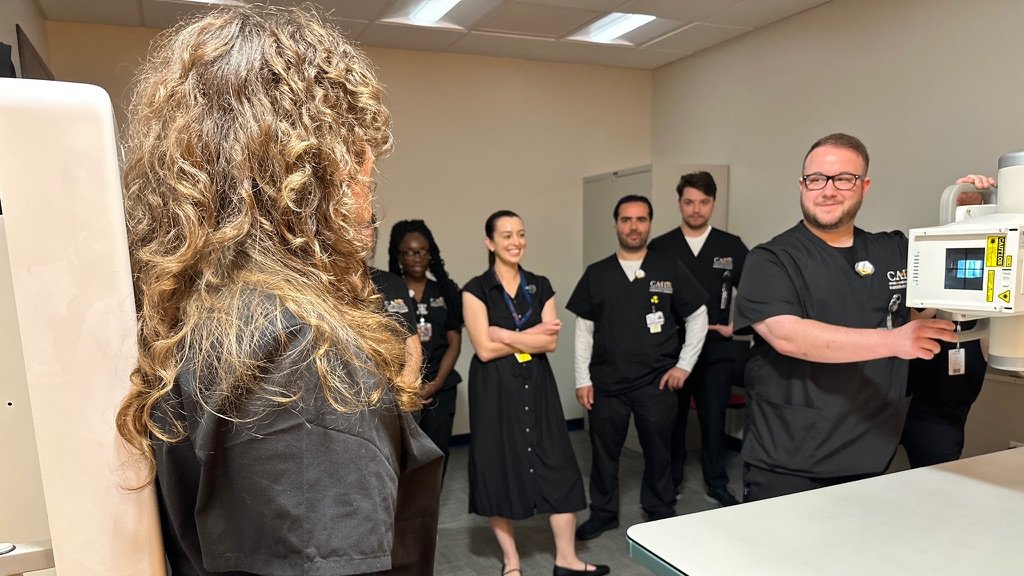
- Hands-on lab practice so you can build positioning and equipment skills in a supportive setting
- Clinical rotations where you apply what you’ve learned with real patients
Clinical Training Across NYC
CAHE students complete clinical rotations at 90+ affiliated sites across New York City. You’ll gain real-world experience alongside working technologists and imaging teams. You’ll see how a department runs, how techs handle different cases, and how a team works together to care for patients.
Is Radiography Right for You?
Radiography is worth a close look if you:
- Are a recent high school graduate exploring healthcare
- Are changing careers and want a focused, structured path
- Enjoy technology, problem-solving, and helping people
Take the Next Step With CAHE
Since 2007, the Center for Allied Health Education has offered fast-track, accredited allied health certificate programs for students in Brooklyn, Staten Island, and the greater NYC area. If you’re ready to explore a career in medical imaging, we’re here to help you understand your options and plan your path.
Explore the Radiography program to learn more, or Request Info to connect with our team and get your questions answered.